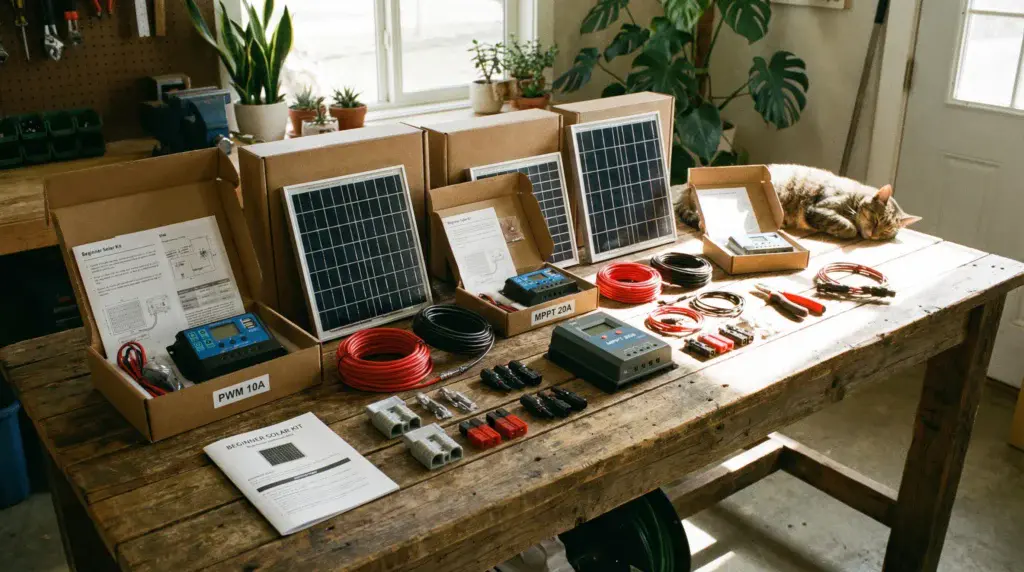
Often the biggest step in going solar is figuring out how to get started. Beginner-friendly entry level solar kits make it easier to take that first step. You get the minimum components you need to have a functioning solar setup that can keep some batteries charged, run a few LED lights, run a fan in the shed or greenhouse – you name it!
You can start saving on the electric bill, reduce your carbon footprint, and learn more about how solar energy works, all without a huge upfront investment.
If you’re new to solar setups, the technical specs and product choices can be overwhelming. I remember those first confusing searches for “beginner solar kits” and wondering if I’d need to hire a professional for every step. The good news is there are many affordable kits on the market that make this simple. Pretty much plug and play like setting up a new printer. They include everything you need for a basic setup, even if you have zero experience.
Let’s cover five affordable solar kits that are great for beginners, breaking down what’s included, how easy they are to use, and the main reasons they stand out. I’ll also explain what to look for in an entry level kit, so you have the confidence to get started with solar energy at home, in your RV, on a boat, a shed, or even on a camping trip.
1. Renogy 100W 12V Monocrystalline Solar Starter Kit
The Renogy 100W 12V kit is one recommendation I’ll give to beginners who want to dip their toes into solar power without having to spend a lot of money up front. This kit includes a 100watt solar panel, a 30A PWM charge controller, mounting brackets, cables, and connectors. Just add a 12V battery, which you can find separately online or at many hardware stores.
These are very easy to set up, especially if you follow Renogy’s step-by-step instruction guide and watch a couple of their helpful videos. The panel produces enough energy to power small devices, LED lights, laptops, or to keep your phones charged, so it’s a solid kit for cabins, RVs, or backup use at home.
Once you get the hang of it, expanding your initial investment can be as easy as snapping in an additional panel or two.
What I like most is that it all arrives in one box ready to set up. It’s a huge relief when you’re just starting and not sure what’s required. I love buying these when I need a little power here and there, like a garden shed or a greenhouse fan, etc.
Reasons to Consider This Kit:
- Clear instructions and simple assembly
- Good price for power output and brand reliability
- Expandable, you can add more panels later to increase your setup
- Well packaged with corner protectors on the solar panel(s)
- Learn more about the Renogy 100W 12V Starter Kit here! (Affiliate link)
- Want more? Check out the Renogy 200W 12V Starter Kit! (Affiliate link)
I’ll say it again! These have to be the easiest kits I’ve seen for getting started!
2. ECO-WORTHY 400W 12V MPPT Off-Grid Solar Kit
The ECO-WORTHY 400W solar panel kit is a great start if you need something a bit bigger on power but still beginner friendly setup and price wise. This will fit neatly on a small space like a shed, RV rooftop, or even an apartment balcony.
This kit can be set up in minutes. The solar panels come with all you need to connect to the included MPPT (Maximum Power Point Tracking) solar controller that optimizes combined power output from the panels to keep your storage battery bank charged.
What’s in the box?
- 4 100W 12V Monocrystalline Solar Panels
- 40 amp MPPT Solar Controller
- 5 meters of 12awg Extension Cable with MC4 Connectors
- 3 MC4 “Y” Branch Connectors
- 4 Z Mounting Brackets
- Learn more about the ECO-WORTHY 400W 12V MPPT Off-Grid Solar Kit (Affiliate link)
3. Jackery Solar Generator 240 v2
Looking for a great starter kit that is portable? The Jackery Solar Generator 240 v2 is small and ready to plug and go anywhere. The compact SolarSaga 40 watt four-fold solar panel packs up neatly and unfolds easily when you’re ready to use it. This kit includes the Jackery 40 watt SolarSaga folding solar panel and the Explorer 240 v2 portable power station.
The power station features a quick 2 hour charge on AC and multiple charge ports for your devices. The state of the art LiFePO4 battery is designed for safety and long life.
Highlights:
- Solar panel folds in four places easy storage and setup in tight spots
- Efficient 23% solar conversion rate
- Both units are lightweight and easy to move
- USB-A and USB-C charging ports for your devices
- 256 Wh/300 watt output
- LiFePO4 battery with 3000 charge cycle lifespan
This one sells out a lot! Check Jackery for their other great options if the 240 is sold out.
Next up, we’ll touch on a couple more super low priced small brand starter kits that are popular.
4. Hoysicy 12 Volt 100 Watt Solar Panel Kit
Here’s another runner-up in the affordable starter kit department. The Hoysicy 100W Solar Panel Kit. This comes with a 12 volt monocrystalline solar panel, a 20A solar charge controller and 16+ foot extension cables. One note, these extra long cables are a thinner gauge than others. There may be some loss if push the limit on them.
The monocrystalline solar panel is nice. The mounting hardware included is a bit flimsy but usable.
The controller has a digital display to show current and voltage, which makes monitoring your system really straightforward.
This is definitely a “starter system” with a very good price!
Features You’ll Appreciate:
- Very affordable price point and simple
- Extra long cables
- Smart solar charge controller with protection for overcharge/discharge, overvoltage and short circuit
- Includes everything for basic solar use (except the battery)
- Check out the Hoysicy 100W Solar Panel Kit on Amazon (Affiliate link)
5. Topsolar 12 Volt 100 Watt Solar Panel Kit
The Topsolar 100W kit is one of the most affordable and compact options for hobbyists and beginners. It includes a solid monocrystalline solar panel, a 30A 12V/24V solar charge controller, mounting accessories, and cables. I like recommending this kit for first time DIY enthusiasts because it has a great price point, durability, and easy installation.
This kit works well for boats, RV roofs, garages, sheds, stables, and small off-grid setups, anywhere you want a small low maintenance system. The included instructions seem to be minimal, but the kit is pretty much self explanatory. Set the panel in a sunny place, plug in the controller, hook up a battery and you’re set. I have one in the garage keeping some power tools charged.
Best Parts for Beginners:
- Very affordable and simple
- Compact size fits tight spaces
- Includes everything for basic solar use (except the battery)
- Check out the Topsolar 100W Solar Panel Kit on Amazon (Affiliate link)
What to Look for in a Beginner Solar Kit
When picking your first solar kit, I always focus on a few super important factors. First, you want a kit with clear installation instructions and all the cables or parts included. Look for one with a decent warranty and customer support, because as a beginner, questions come up fast. Price matters, but it helps to consider what you actually need to power. Go bigger if you expect to add more gadgets later.
Beginner kits should also come with a charge controller that manages the power going into your battery and helps prevent overcharging. Pay attention to how portable or permanent you want your setup to be. Rooftop kits work great for homes and cabins, but portable panels are better for camping, boats, or travel. Finally, check online reviews for feedback, real life tips, and any challenges other users have faced, since these can help you avoid common mistakes.
As a quick note, always check the weather conditions in your area before installing your panels to get the best results. Solar efficiency depends on sunlight hours and placement, so use a solar calculator tool to estimate output for your specific region. This will help you plan your setup and avoid overloading a small system with too many devices at once.
Getting the Most from Your First Kit
My first solar panel setup taught me to start simple and expand later. I started by powering just a few lights and phone chargers to learn how the kit worked and get used to monitoring the battery and sunlight. If you’re not sure where to begin, connect your system to something small and practical, like a camping light or a garden shed. Once you feel more confident, you can upgrade by adding more panels or trying a larger battery bank.
Many brands have lively online forums or video guides where new users share photos and ideas. I learned a lot by reading these and watching step-by-step install videos before touching any wires. If you have questions, don’t hesitate to reach out to the manufacturer’s support. Good brands reply quickly and walk you through the basics.
One tip is to join solar energy community groups online. These spaces are packed with helpful advice from other first timers and experienced users alike. You can post photos of your setup, ask questions, and even swap ideas for creative uses of your solar kit. Community feedback can be a real confidence booster.
One more perk with starting small is that a lot of these system can scale up to larger capacities as your needs grow.
Wrapping Up
Affordable solar kits have opened up the world of clean energy to beginners like me. By starting with a kit that fits your needs and comfort level, you can learn how solar works, save money, and enjoy the satisfaction of producing your own power. Each of the kits on this list is simple enough for a first time installer and flexible enough to grow as your confidence builds. Small steps with solar can lead to bigger projects in the future, giving you more energy freedom with every upgrade.
One last word – When you click and buy through our links, you’re doing more than getting an awesome solar kit. You’re supporting us in a way that doesn’t cost you extra but helps us keep bringing you the best tips and latest information. It’s a win for both of us!
Let’s make this world better, 100 watts at a time!