Here we are, half way through 2026. Solar backup systems are more than just keeping the lights on during a power outage. They have become part of a big shift towards sustainable energy solutions. We as homeowners want more Earth-friendly and reliable ways to power our lives. Solar backup systems are a big step towards energy independence and freedom from “the grid” .
When power from the “grid” goes out, a good solar home backup system will kick in and keep things going. This is a lifesaver in areas with frequent outages due to natural disasters or aging infrastructure. These systems also reduce dependency on limited fossil fuels and their subsequent negative effects on the environment.
There are three main types of solar backup systems to consider. Each serves different needs and preferences.
- Grid-tied: These systems are synchronized to the electrical system in your home and “assist” it by generating additional power to offset the total you use from your meter. They do not provide backup during outages. Grid-tied is a good low cost option for simply reducing your electric bill where grid power is reliable.
- Off-grid: These are independent stand alone systems that are designed to generate all of your electric power without any need for grid power. Off-grid systems are ideal for remote locations and homesteading.
- Hybrid: These systems combine the best of both, offering flexibility and reliability. They help reduce your electric bill while grid power is present, and switch over to full backup during an outage. Hybrid systems are ideal for locations where there are periodic power outages.
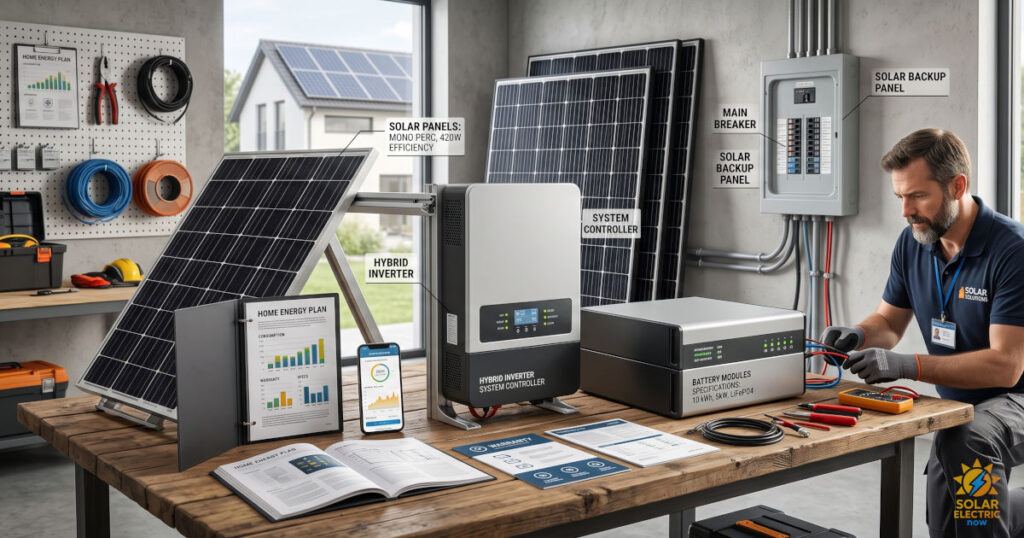
The majority of solar full home backup systems today are “hybrid” combining solar panels for harvesting raw power from the sun, batteries for storage, inverters to generate AC and a central smart controller to coordinate it all.
Understanding these distinctions is a first step to choosing what will work best for your home and lifestyle.
- See also: Grid Tie Vs. Off-Grid Solar Systems: What’s Right For You?
- See also: How Grid Tie Inverters Work: A Simple Explanation
Key Features to Look For in a Solar Backup System
When considering a back-up solar system, you’ll need to know what features are important. This will help you navigate the technical details as you read into specifications. Let’s look at these key features that make up a typical home solar backup system.
Solar Panels:
It starts here. These convert the sun’s energy into the raw DC electricity that your system will either store in batteries for later or convert it directly to AC for immediate demands.
Battery:
Next big one is battery storage capacity. Your system will have a bank of batteries for storing the extra power generated from your panels. Battery capacity determines how much power you’ll have during an outage and how long it’ll last. Think about your household’s energy usage to decide what capacity suits your needs without overpaying for power you’ll never use. You’ll usually see this capacity expressed in kilowatt-hours (kWh). The monthly kilowatt-hour usage reported on your monthly electric bill can be a good start point.
Inverter:
Inverter capacity and efficiency is another important point. The inverter converts the DC power from battery storage, or directly from your panels, into AC for your home appliances. Inverter efficiency is the percentage of the power fed into it that is converted to AC. All inverters will draw a small bit of the input power for their own internal operation. A high efficiency percentage means that that inverter requires very little power for itself and can deliver the most energy possible from your system. Inverter capacity is the amount of watts the inverter can generate as AC – the amount of stuff, appliances running, lights, etc you can have running at once.
Controller:
This is the brain that runs the show. It controls the operations of your system. Things such as when to send power directly from your panels to the inverter or store it in your batteries for later. When grid power is present and your batteries are charged, a “hybrid” system can function as a “grid-tied” system sending power back into your local grid and lowering your electric bill. The controller also monitors your system, let’s you adjust settings, integrate with other smart home devices. Most systems today include a smartphone app for managing and monitoring your system from anywhere.
Future-proofing:
Systems that are scalable and expandable can grow with your needs. Maybe you start small, but as your family grows or your energy needs increase, you can add more (or upgrade existing) solar panels or batteries without having to start from scratch.
Compatibility:
A system that is flexible and can accommodate different types of solar panels and configurations, or even components that are interchangeable, is important. Not all panels are created equal, and their efficiency can directly impact how much energy they can capture and store. Ensure that the system you’re eyeing is compatible with today’s high-efficiency panels, controllers, inverters, batteries, etc.
Making an Informed Decision: User Experience and Installation
Beyond the technical specs, user experience is a crucial piece of the puzzle when picking a solar backup system. Real-world insights from user reviews and ratings provide a wealth of information about reliability and satisfaction levels. Keep an eye out for common feedback themes, like ease of use or the reliability of customer support, which can indicate potential pros and cons. Join some solar energy/off-grid forums and groups and ask questions.
Installation is the next big step. A smooth installation process can save you a lot of headaches. Finding a certified and trusted installer who follows best practices not only ensures that your system is set up correctly but can also help in maintaining the warranty on your equipment. Some systems offer easy DIY setup options, but professional installation may be a safer bet, especially if you’re new to solar.
Thinking about cost? Think about the upfront costs vs the long term return on investment, as well as potential maintenance/replacement costs down the road. Cheaper systems might save you bucks upfront, but they could fall short on efficiency or durability. Take some time to consider the long-term savings and benefits, such as lower energy bills or tax incentives. The real value in your system choice is long term.
Here are a few solar backup systems from reputable sources to give you an idea:
- Eco-Worthy Complete Off-Grid Solar Power System (Affiliate link)
- Jackery Solar Generator HomePower 3000 (Affiliate link)
Lastly, maintenance plans cannot be overlooked. Even the best solar backup systems need periodic maintenance. Knowing you have ongoing support can prevent minor issues from becoming major problems, ensuring your system stays reliable for years to come.
I hope this helps you find a good fit for your home or business!
Oh and here’s a little transparency: Our website contains affiliate links. This means if you click and make a purchase, we may receive a small commission. Don’t worry, there’s no extra cost to you. It’s a simple way you can support our mission to help you go Solar Electric Now!
Cheers to energy independence!

This was helpful, especially the part about not overpaying for battery capacity you may never actually use. I think that is where a lot of beginners, including me, can get confused because “more backup power” sounds automatically better until you start thinking about real daily habits and what actually needs to stay running during an outage. I like the idea of using the monthly kWh number from the electric bill as a starting point, but I wonder how much extra cushion you would normally recommend adding for unexpected situations. For example, would you size the system mainly around essentials only, or around keeping life almost normal during a longer outage?
Hi Hanna!
If you are in an area of frequent prolonged power outages, you’ll definitely want to use only minimum essentials while on backup power, unless you want to invest in a higher capacity system or a full hybrid on-grid/off-grid system.
Solar panel capacity and how much sun they receive daily is the big factor. As long as your solar panels can keep your batteries charged, you’ll be powered indefinitely.
Cheers!