If you’ve been putting off going solar and were counting on that 30% federal tax credit to help pay for it, there’s news you need to know. That credit is gone. Not phased down, not reduced. Chopped, gone, as of January 1, 2026.
Here’s what changed, why it happened, and what’s actually still available to us homeowners today.
The Credit That Was Supposed to Last Until 2034
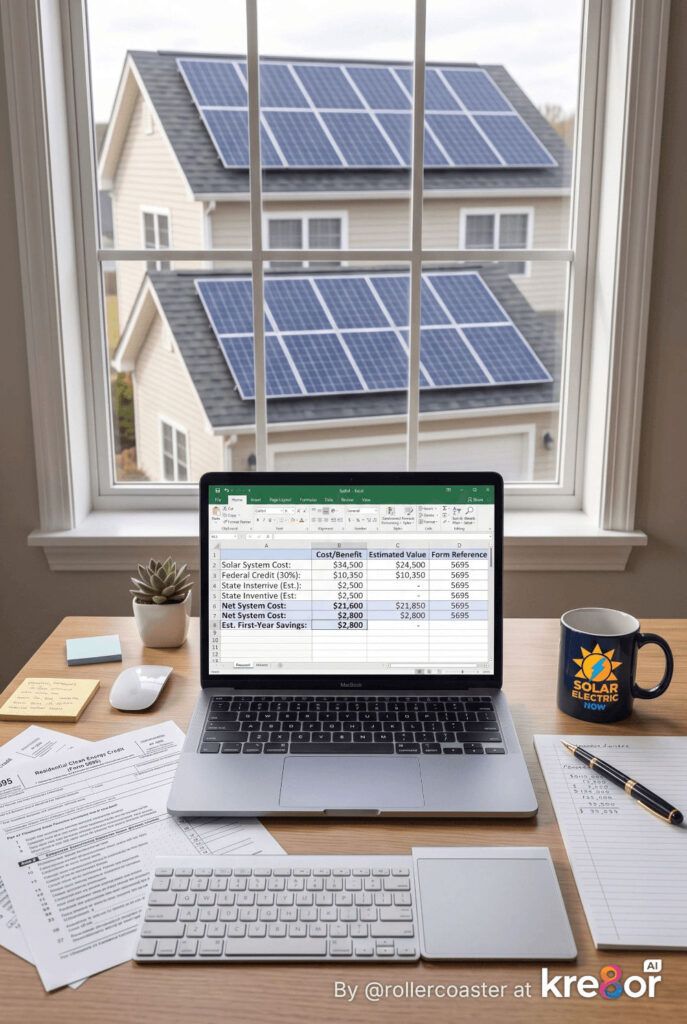
Going back a few years, under the Inflation Reduction Act of 2022, the Residential Clean Energy Credit (Section 25D of the tax code) let homeowners claim 30% of the cost of solar panels, battery storage, geothermal heat pumps, wind turbines, and solar water heaters installed at their home. There was no dollar cap, and the credit was scheduled to run at 30% through 2032, reduce to 26% in 2033, then to 22% in 2034 before disappearing.
Well… That timeline no longer exists.
What Changed: The One Big Beautiful Bill Act
On July 4, 2025, Congress passed the One Big Beautiful Bill Act (OBBBA), a sweeping tax and budget law that rolled back many Inflation Reduction Act clean energy incentives. That included the Residential Clean Energy Credit. It was repealed outright for any system placed in service after December 31, 2025. No 2034 phase out. Just chopped!
As it is now, the IRS is treating a clean energy expenditure as “made” when installation is completed, not when you sign a contract or pay a deposit. So a solar system that’s paid for in November 2025 but not fully installed and operational until February 2026 will not qualify. Only systems installed and placed in service by December 31, 2025 could claim the 30% credit.
The same bill also killed the Energy Efficient Home Improvement Credit (Section 25C), another credit that covered up to $3,200 a year for things like heat pumps, insulation, efficient water heaters, and home energy audits. This too, is gone.
Here is some good news: If you installed qualifying equipment before the cutoff and your credit exceeded your tax liability, you can still carry forward the unused portion to future tax years. That “carry forward” right wasn’t touched. Be sure to discuss this with your tax professional.
What’s Still Available in 2026
The federal 30% credit for homeowner-owned systems is off the table, but it isn’t the only way to save on solar. Here’s what’s actually still standing.
- Third-party-owned solar (leases and PPAs). This is now the main path to a federal incentive. If you go through a solar lease or power purchase agreement (PPA) rather than owning the system outright, the company that owns the panels on your roof can still claim a separate, business-side credit (Section 48E) through the end of 2027. Many solar companies pass some of that savings on to you through lower monthly payments, even though you personally can no longer claim a credit on your tax return.
- State tax credits and rebates. These were never part of the federal repeal and vary widely by state. New York offers a 25% credit up to $5,000, South Carolina offers 25% with no cap, Massachusetts combines the SMART program with SREC markets, and Oregon offers a credit up to $2,500. Check with your state energy office or a local installer to see what applies where you live.
- SREC markets. In states with Solar Renewable Energy Certificate programs, you can still earn and sell certificates for the electricity your system generates, providing an ongoing revenue stream separate from any tax credit.
- Net metering. Utility net metering programs, which credit you for excess electricity you send back to the grid, are unaffected by this legislation. That’s a utility and state regulatory matter, not a federal tax credit.
- Property and sales tax exemptions. Many states and municipalities still exempt solar installations from added property tax assessments or waive sales tax on equipment. These weren’t touched by OBBBA either.
- EV charger credit. If you’re also looking at an EV charger for your home, Section 30C survives, but only through June 30, 2026.
What This Means If You’re Considering Solar
The math on solar has changed. Without the 30% federal credit, the up-front cost of home solar electric system is higher, which makes state incentives, utility rebates, and financial aid more important than ever in deciding whether solar is doable for your home.
Disclaimer! If you’re weighing your options, please do talk to a licensed tax professional about your specific situation, since eligibility and state incentives vary and this is general information, not tax advice.
So… Is solar still worth it?
Yes! While the federal tax advantages for solar are basically gone in 2026, remember that going solar is still a long term investment than can more than pay for itself in savings on your electric bill, benefits to the planet, and keeping the lights on during outages. The rules may have changed, but the benefits of solar are there.