An old technology in semiconductors offers a new improvement in solar panel technology. If you’re considering solar panels for your home or business, you might have come across the terms “N-type” and “P-type” panels. These refer to the kind of semiconductor material used inside the cells, and they play a big role in how panels work, what they cost, and how long they last. Let’s learn about both so you can feel confident choosing the best fit for your needs.
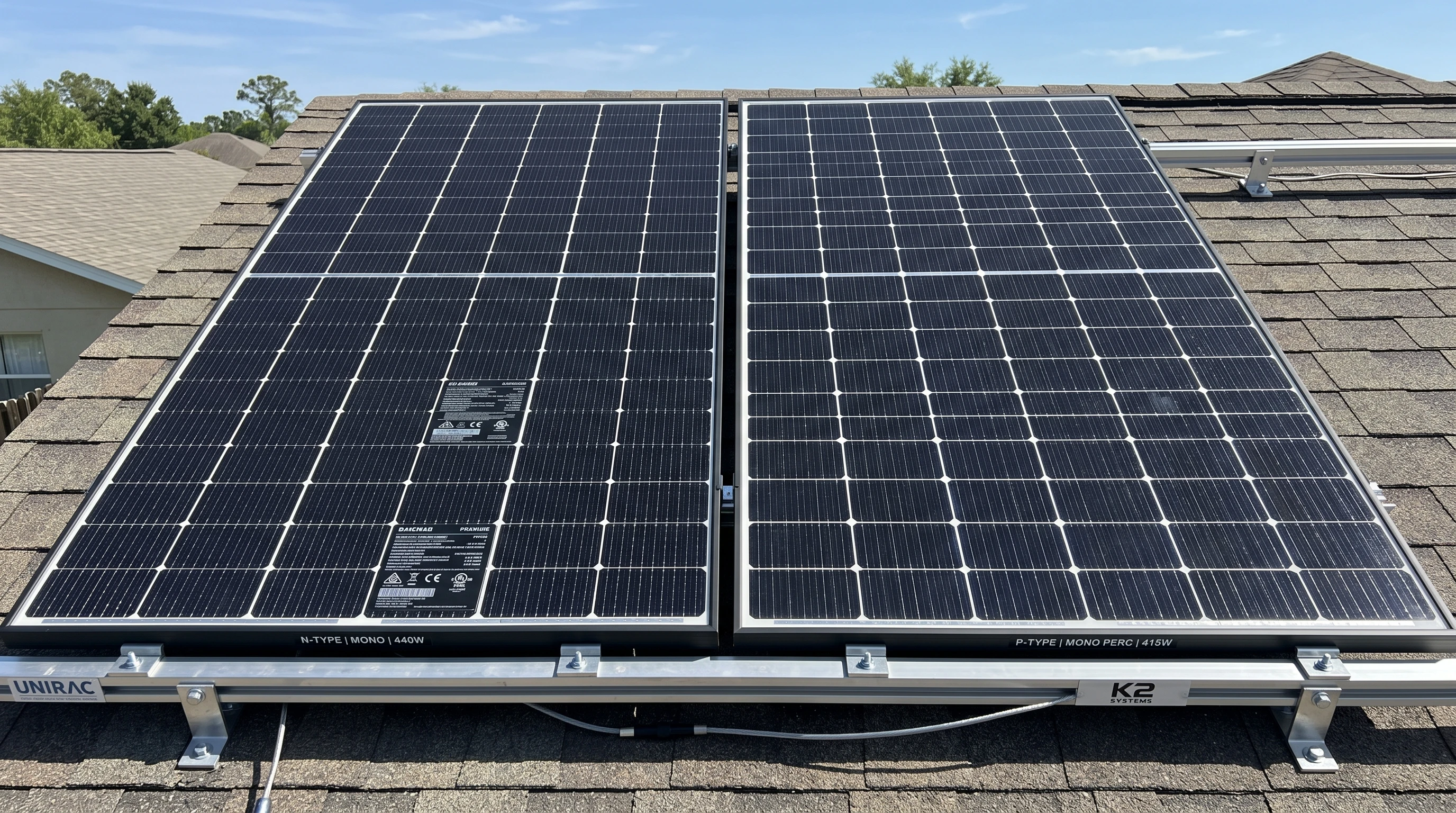
What Are N-type and P-type Solar Panels?
Solar panels generate power using cells made from silicon, a material that easily moves electricity. These silicon cells come in two forms named by their dominant type of charge carrier: N-type and P-type. The two have differences that affect efficiency, cost, and lifespan.
First the basic semiconductor material: P-type panels use silicon doped with an element like boron, making the base have a “positive” charge. N-type panels use silicon doped with phosphorus, which gives the base a “negative” charge. These differences in materials create varied electrical properties, making each panel type perform differently over time.
How N-type and P-type Panels Work
Both types use the photovoltaic effect, where light hitting the silicon knocks electrons free and creates electricity. The distinction is in which part of the cell attracts and releases those electrons:
- P-type: The base is positive, so electrons move toward a negatively doped layer. This is the most common option in today’s residential solar panels.
- N-type: The base is negative, so electrons flow in the opposite direction compared to P-type. This type is gaining momentum as technology costs drop and new manufacturing methods roll out.
The Origins and History of N-type and P-type Solar Technology
The earliest practical silicon solar cell, created in the 1950s, was actually N-type. For many years, though, P-type panels became the go-to because manufacturing was less complex and cheaper. Advances in technology now allow more companies to revisit N-type designs, especially as demand grows for higher efficiency and longer-lasting panels.
Today, P-type silicon—usually found in panels called PERC (Passivated Emitter and Rear Cell)—rules the market due to its affordability and reliable performance for most homes. However, several manufacturers now offer N-type modules, which brings up the benefits and tradeoffs of each.
Efficiency Differences: What to Expect
Solar panel is efficiency is one of the most important features to look for. That is – the percentage of sunlight hitting the panel that can be turned into usable electricity. N-type solar panels tend to have higher efficiency than P-type panels. You’ll often see N-type modules reach 21-23% efficiency, compared to 19-21% for many P-type models. This difference doesn’t seem huge on paper, but it matters if your roof has limited space, since you get more power from the same area.
An advantage of N-type cells is that they are are less prone to a phenomenon called Light Induced Degradation (LID). LID reduces efficiency in P-type cells, especially in the first year after installation. Since N-type panels are less prone to LID, they produce output at or near their “new” efficiency rating over a longer period of time.
P-type vs. N-type: Lifespan and Degradation
A panel’s lifespan dictates how many years of power you’ll get before production drops to a level you notice on your bills. On average, well made P-type solar panels last 25 years or more, but their power output slowly declines over that time. Annual degradation rates for P-type panels are typically about 0.6% to 0.7%. After 25 years, you might have about 80 to 83% of your original output. If you are comparing warranties, be sure to look at the guaranteed output figures in the final years. In many cases this tells you how much confidence manufacturers have in their product’s durability.
N-type panels have better resistance to long term degradation. Their annual decline is usually around 0.25% to 0.4%. That means after 25 years, N-type panels might still provide 88 to 92% of their starting output, which is a real advantage for anyone who plans to keep the panels for decades or is trying maximize long term output in a limited space. Lower degradation rate means those panels continue to deliver stronger clean energy savings, which can offset the somewhat higher cost of N-type panels over time.
Manufacturers may back up these claims by offering longer performance warranties for N-type modules. Checking the warranty period can give you a good idea of which model will likely last longer in real use.
Cost and Availability
While N-type panels bring better efficiency and longer life, they do tend to cost more (at least for now). The manufacturing process is more complex, and raw material costs can be higher. P-type modules remain the most affordable and widely available, especially for larger installations where total cost matters most. For homeowners trying to balance budget with performance, P-type panels are often the default choice.
The price of N-type panels are starting to come down as production grows and processes are refined. This will make them more accessible for both homeowners and commercial users who want the extra performance. Industry analysts predict that in the next several years, N-type modules could catch up to P-type in terms of price, at which point the added efficiency and longevity may tip the scale in their favor for most buyers.
Common Challenges When Choosing Between N-type and P-type Panels
- Complexity of Technology: N-type panels are usually built with more advanced cell processes. Buyers sometimes find the technical jargon overwhelming or worry about getting help if repairs are needed, as fewer contractors may be familiar with N-type panels in some regions.
- Upfront Cost: For now, N-type panels cost more than similar capacity P-type options. If every dollar counts during installation, P-type may be a more reasonable option.
- Degradation Concerns: Some homeowners have concerns about how quickly P-type panel performance might decline, especially after hearing about Light Induced Degradation. Researching the warranty terms and expected output over time helps you forecast the real value of each option.
Panel Degradation
As we’ve touched on earlier, solar panels slowly lose output as they age due to environmental exposure; extreme heat, cold, and moisture all have an effect. N-type panels resist this loss better than P-type, which is a key advantage if you live in a climate with strong UV or higher humidity. Again, a good panel warranty, say 25 years, can give peace of mind. Ultimately knowing actual performance numbers for each panel type helps you make an informed choice. For those living in areas with harsh winters or scorching summers, picking a panel type that’s better at handling temperature swings is critical to long term performance and cost savings.
Efficiency Loss and Maintenance
P-type panels are more affected by efficiency drops in the first few years because of LID. That said, both types need basic maintenance like occasional cleaning to prevent dirt buildup, which can also lower power production. Keeping a simple schedule to hose off dust or leaves is usually enough in most climates. In places with higher pollution or dry, dusty conditions, a soft brush and water can help make sure sunlight isn’t blocked, keeping your system working at its best.
- See also: Maintenance
Supply and Installer Experience
Some areas have more ready access to P-type panels, and local installers may have years of experience with their installation and repair. By comparison, N-type panels are newer to the mass market, so it’s important to find an installer who knows the product well and can provide ongoing support. Asking about installer training, support, and after-sales service is a good step to be sure you get trouble-free operation across your system’s lifetime. Connecting with previous customers or following reviews should help you vet an installer’s ability to handle the panel type you choose.
- See also: Installation
Putting N-type and P-type Panels to Work: Real World Uses
- Limited Roof Space: If your home or business has a small or shaded roof, N-type panels deliver more power per square foot, making the most out of limited sunny areas. This is especially useful in city environments or buildings with oddly-shaped roofs.
- Long Term Investment: If you plan to stay in your home or operate a building for decades, N-type’s lower annual power loss can add up to thousands more kilowatt-hours harvested over the life of the system. For solar users with a “set it and forget it” mindset, that long-term stability can maximize savings.
- Lower Upfront Budget: For projects with a strict starting budget, P-type panels keep installation costs down, freeing money for other upgrades like smart inverters or energy storage. In some markets, incentives or rebates may further close the gap, making it smart to compare total costs before deciding.
Frequently Asked Questions
Question: Are N-type solar panels always the best choice?
Not necessarily. While N-type panels offer better efficiency and longevity, P-type panels are cost effective and widely available. Your best choice depends on your project size, budget, and how long you plan to use the system.
Question: Can I mix N-type and P-type solar panels on the same roof?
Mixing types isn’t usually recommended because their voltage and performance under shade or heat can differ. For most homes and businesses, picking a single panel type keeps the installation trouble free and ensures a stable system.
Question: How do I know what type of panel I have or should get?
Product labels, data sheets, or discussion with your installer can clarify which type you’re considering. Asking about efficiency, warranty terms, and expected power after 25 years can also reveal the value each panel delivers.
Key Takeaways When Choosing Between P-type and N-type Solar Panels
Picking the right solar panels means balancing upfront budget, long-term performance, and the size or conditions of your installation site. N-type panels bring higher efficiency and lower long term degradation, which benefits areas with limited roof space or owners planning to use the system for decades. P-type panels keep installation simple for most budgets and are available through almost any reputable installer. Comparing technical details, actual user experiences, and warranty support helps you spot the best value for your needs.
I always suggest consulting a local expert who can assess your roof, power needs, and budget before making a final decision. Checking warranties and comparing real-life user reviews can also point you toward the option that’s both practical and reliable for your future energy savings.
I hope this article clarifies the differences between the two! Cheers…