MPPT (Maximum Power Point Tracking) solar charge controllers are a highly optimized type of solar battery bank charger. We want the most of every bit of sunlight hitting our panels, especially in areas where sunlight can be unpredictable or limited. MPPT technology helps turn the varying amounts of sunlight power from panels into steady usable energy for charging batteries.
Let’s explore what MPPT charge controllers (or “Muppet” controllers as I like to call them :)) are, how they work, and how these work effectively at keeping solar battery systems charged and in optimum health.
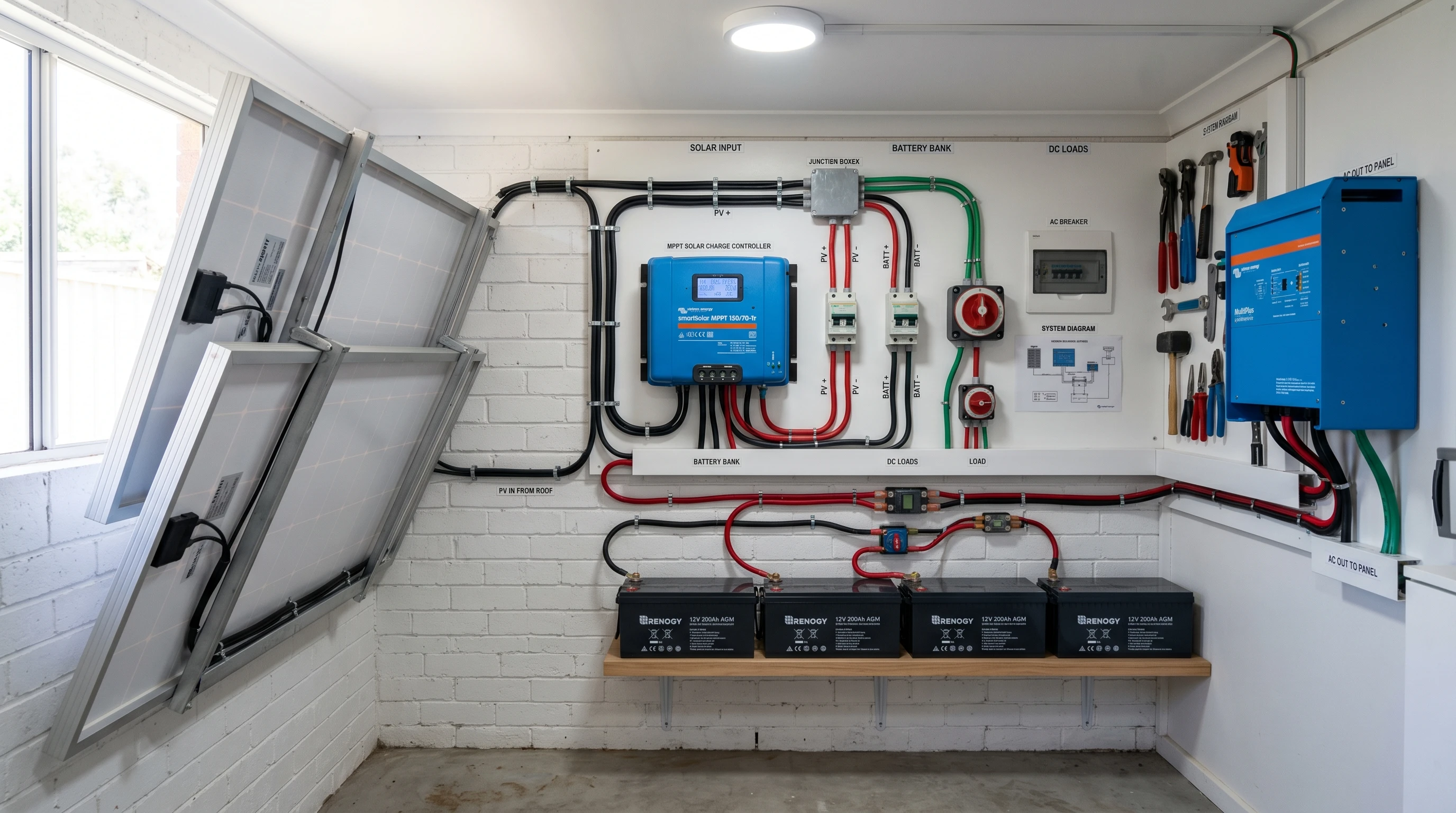
What Is an MPPT Solar Charge Controller?
An MPPT (Maximum Power Point Tracking) solar charge controller is a smart device that sits between solar panels and batteries. Its job is to make sure the solar panels always give the highest amount of usable power possible. Unlike older controllers, MPPT tracks the best combination of voltage and current coming from the panels, automatically adjusting to changes in sunlight or temperature. This means more energy directed into charging batteries than with a basic charge controller. Modern solar systems almost always include MPPT controllers for this reason. The MPPT controller has become a popular choice for off-grid and grid-tied systems alike, as it allows for greater use of available power from the panels. People in both rural and urban areas find that MPPT controllers improve performance of existing systems across varying weather and light conditions.
Why Efficient Solar Charging Matters
When I depend on solar power, getting the most energy into my battery bank is really important. Solar panels don’t always perform at their peak because of shifting sunlight or cloudy days. Without MPPT, a lot of generated power would simply go to waste. The controller actively monitors panel performance to maximize charging and help prolong battery life. That’s good news for both my wallet and the health of my off grid system. Increasing efficiency also means I might get by with fewer panels or smaller batteries for the same energy needs. This can lower both upfront and long term costs. Over time, the savings in energy and equipment can really add up, which is why more solar enthusiasts and professionals recommend making the switch to MPPT technology. Improved efficiency impacts not just the amount of electricity you receive, but also the return in environmental benefits.
- See also: What Are Anti-Shading Solar Panels?
How MPPT Actually Works
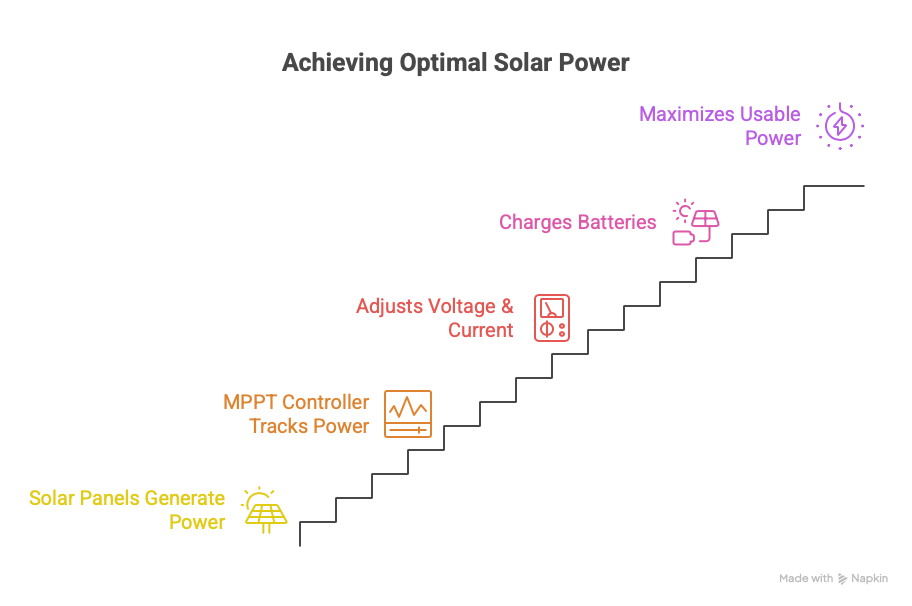
The key to MPPT is that it continuously checks the output of my solar panels, looking for the exact spot (the maximum power point) where power delivery is highest. Solar panels have an ideal operating voltage and current at any given moment. But factors like sunlight intensity, angle, and temperature change these values constantly. MPPT automatically adjusts so the panels are always working at their sweet spot.
Compared to simple PWM (Pulse Width Modulation) controllers, which just connect panels to batteries directly or switch them on and off, MPPT converts excess voltage from the panels into extra current for the battery. This makes charging up to 30% more effective, especially under less than perfect sunlight.
Example: If my panels are producing 17 volts but my batteries only need 12 volts, MPPT transforms that extra voltage into additional charging current rather than letting it go to waste. This keeps the batteries charging quickly without overloading them. It’s a smart way to make use of power that would otherwise be lost due to mismatched voltages. This feature especially shines in challenging conditions, like when clouds pass overhead or during colder weather, since solar panels often work more efficiently in cool temperatures. The ability to use these fluctuations is a key reason MPPT controllers have become so trusted among regular off-grid and backup power users.
Types of MPPT Charge Controllers
MPPT charge controllers come in a range of sizes and feature sets, so I can choose one that fits my power system:
- Small Basic Units: Perfect for simple systems like RVs or small cabins. They’re easy to install and set up, just needing some basic wiring and settings. People who are new to solar power often start with these because they are straight forward and reliable.
- Advanced Controllers: Used in larger home or commercial installations, these come with extras like data logging, Bluetooth, Wi-Fi control, and the ability to handle bigger/multiple solar panel arrays. These more advanced models are ideal for people who want robust monitoring and control.
It’s smart to choose an MPPT controller with a little extra capacity compared to the total expected solar panel load, to give the system some room for upgrades or unexpected surges. This means your solar setup is future proofed and can handle short bursts of extra sunlight or extra panels if you decide to expand later.
Advantages of MPPT Solar Battery Charging
MPPT charge controllers come with many practical benefits including:
- Improved Charging on Cloudy or Cold Days: I still get good charging power when sunlight is weak or temperatures drop, where basic controllers would slow down a lot. This is especially valuable for people living in temperate climates or who travel to areas with changing weather.
- Better Battery Health: Any good charge controller will have safeguards to prevent overcharging, high/low temperatures, short circuits and over discharging. Batteries are an expensive investment in your system, so your charge controller should protect them. This is especially important for older batteries that do not have the built-in protections many modern batteries have.
- Flexible Panel Choices: Many MPPTs are designed for a wide range of input voltages and wattage. This gives you a lot of room to use most existing panels as they are, or choose what is most convenient for you. Some MPPTs have multiple inputs or are multiple independent MPPTs in one unit. This is handy if you have multiple solar panel arrays with different outputs.
- Remote Monitoring: Many modern MPPT controllers have (or an option for) internet, Bluetooth, or some form of “smart home” connectivity, to enable monitoring, adjusting settings and receiving alerts from a smart phone or computer. This is nice if you are away from home a lot.
MPPT vs PWM: What’s the Difference?
There are two main types of solar charge controllers: MPPT and PWM. The difference between these affects how much energy I can get from my panels.
- PWM Controllers: These are usually less expensive and simpler but don’t convert extra voltage into more charging current. Power loss due to mismatch between panel voltage and battery voltage is common. They work best in small, budget systems where sunlight conditions are ideal and battery banks are matched exactly to panel voltage. In those ideal situations, PWM can be a decent budget choice, but most people will outgrow them quickly as their energy needs grow.
- MPPT Controllers: More advanced and cost a bit more up front, but they make up for it by improving daily and yearly charging efficiency. If I really need to maximize every amp of power, especially in areas with less than perfect sunlight, MPPT is the way to go. As solar technology continues to step up, the price difference between basic PWM and MPPT controllers is shrinking, making MPPT more accessible than ever.
Common Questions and Answers
Question: Is MPPT only for large, costly solar power setups?
Answer: Not at all. Small off-grid systems, tiny homes, RVs, and boats all benefit from MPPT. I use one in my own small solar setup for camping trips. Newer controllers are compact, affordable, and easy to set up. You don’t need a huge system to take advantage of MPPT’s benefits.
Question: How much more power can I expect with MPPT?
Answer: This depends on conditions, but I often see 10% to 30% more energy delivered to my batteries with MPPT compared to PWM. The improvement is largest in the mornings, evenings, or during cloudy weather. For those who track down maximum performance, the difference can be noticeable over months or a year.
Question: Will MPPT work with any battery type?
Answer: Yes. I charge sealed lead acid, AGM, gel, and even lithium batteries using an MPPT charge controller. Be sure you use a charge controller that can charge lead acid batteries. Most higher end models let us set custom charge profiles for different battery types, for best battery health and charge speed. Be sure to match the correct battery type/capacity with the charge controller’s settings.
Question: Is installation difficult?
Answer: Most MPPT controllers come with clear instructions, and I’ve found the process to be only a step or two more involved than a basic controller. I always make sure to use the right gauge wire, follow safety guidelines, and program the correct battery type in the controller’s settings. By double checking connections and safety procedures, you can be up and running in no time. No professional required unless you prefer professional assistance.
Getting the Most Out of an MPPT Charge Controller
Several tips help me run a reliable and effective solar battery system:
- I mount the controller somewhere cool and dry, away from direct sunlight, to prevent overheating.
- Checking tightness of all wire connections every few months keeps things running smoothly and safely.
- I monitor system voltage occasionally to spot problems early. Most modern controllers provide display screens or connect to apps that make this simple.
- Keeping firmware up to date helps me benefit from any new features or bug fixes the manufacturer releases.
- Learning about the controller’s display indicators and alarms ahead of time lets me react quickly if something unusual comes up.
It’s also helpful to review the manufacturer’s recommendations for optimal panel arrangement and battery settings; a few quick checks when setting up make a big difference down the road.
Real World Examples and Applications
MPPT controllers are used in all kinds of solar systems I see every day across the globe. In rural villages that rely on solar for crucial power needs, homes and clinics use MPPT to make sure available sunlight gets stored reliably.
On the Road
RV owners and campers, like myself, trust these controllers to keep fridges, communication devices, and other gear running. I also see businesses, off-grid cabins, and boaters taking advantage of MPPT to power tools, appliances, and navigational equipment.
Out in the Country
For anyone living or working outside city centers, MPPT technology makes solar a lot more viable. Even if grid power is available, using MPPT as a power distribution manager can help cut down on electricity bills by getting more from any solar panels on the roof. Many people use them to keep battery banks topped off for backup power during blackouts or emergencies. I’ve seen firsthand how these controllers boost confidence in solar systems because they make setup easier, reduce waste, and improve reliability.
Developing Nations
MPPT charge controllers are also playing a role in bringing renewable energy to developing regions, where grid electricity may be unreliable or unavailable. With the right setup, entire communities can keep lights, refrigerators, and medical equipment running smoothly, all by making smarter use of available sunlight. Whether it’s for a high tech home solar array or a central village solar installation, MPPT controllers play an important role.
Final Thoughts
Whether upgrading an existing or building a new system, an MPPT charge controller will make a difference in how much usable energy one can convert from the sun. Solar battery charging and power management “with a brain” isn’t just a tech fantasy. It is a real thing now that is making solar and other renewable electricity sources much more practical. As interest in renewable energy keeps growing, MPPT charge controllers are set to become even more important for solar users at all levels.
You’ve invested in that solar electric system, let’s not leave “solar money” on the table! Put a “Muppet” (MPPT) to work for you! Thoughts? Comments? Let’s discuss below!